Beyond Blame: Why Relational Accountability is the Secret to a Lasting Relationship
In the world of couples and marriage coaching, we often talk about accountability. But what does that really mean? Is it just about making sure the chores get done or paying the bills on time?
If you’re only focused on “Did you meet the standard?” you’re missing the profound, trust-building shift that comes from embracing Relational Accountability.
This framework, inspired by Brené Brown's BRAVING model of trust, moves the focus from compliance to connection, and it’s the key difference between a relationship that survives and one that truly thrives.
Accountability Around Standards & Responsibilities
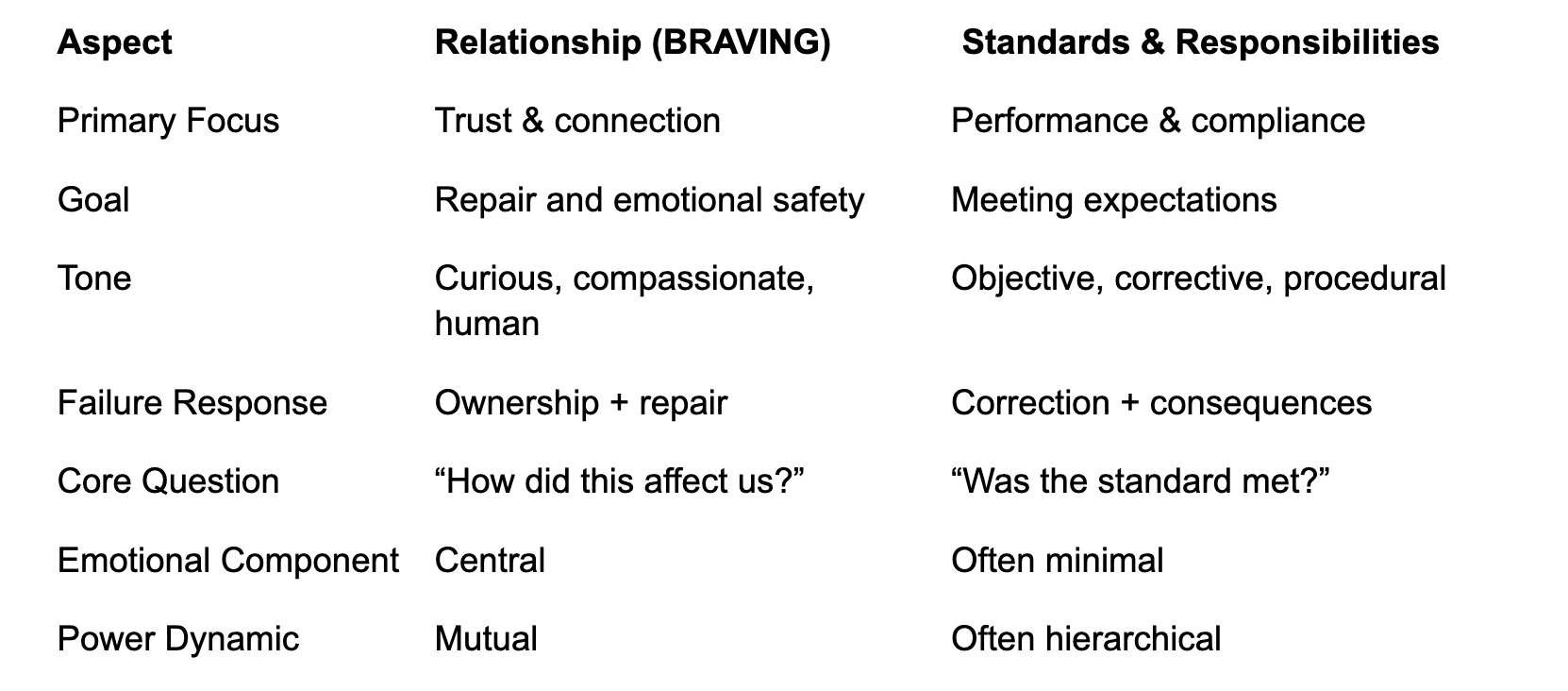
This is the more traditional, performance-oriented version of accountability.
It focuses on:
Meeting expectations
Following rules
Completing tasks
Hitting metrics
Avoiding errors
Correcting behavior
It’s often tied to:
Job roles
Policies
Evaluations
Consequences
Compliance
Accountability in BRAVING: A Relationship-Based Definition
In the BRAVING framework, accountability means:
Owning your mistakes, apologizing when you fall short, and making amends—without blaming, minimizing, or defending.
From a relationship framework, accountability is less about “being right” and more about being trustworthy. It shows up as:
1. Ownership Without Defensiveness
You can say:
“I messed that up.”
“You’re right, that hurt you.”
“I see how my actions impacted you.”
There’s no spin, no justification, no “but you also…” Just clean ownership.
2. Repair Over Perfection
Accountability isn’t about never failing—it’s about repairing well when you do.
The relational focus is:
Restoring connection
Rebuilding trust
Demonstrating care through action
The goal is repair, not punishment.
3. Emotional Responsibility
You take responsibility not just for what you did, but for how it landed.
That doesn’t mean you absorb all blame—but you remain curious, responsive, and empathetic about the other person’s experience.
4. Trust-Building Behavior
Every moment of accountability says:
“You matter more to me than my ego.”
Over time, this builds psychological safety, intimacy, and mutual respect.
The core question here is: “Did you meet the standard?” The emphasis is on outcomes, not emotional impact.

Key Differences: Relationship vs. Responsibility-Based Accountability
Why This Distinction Matters in Relationships
In personal and professional relationships, people don’t just want competence—they want care.
You can meet every standard and still erode trust if:
You avoid ownership
You minimize impact
You stay defensive
You prioritize being “right” over being connected
BRAVING accountability says: “Trust grows when we’re brave enough to admit our humanity.”
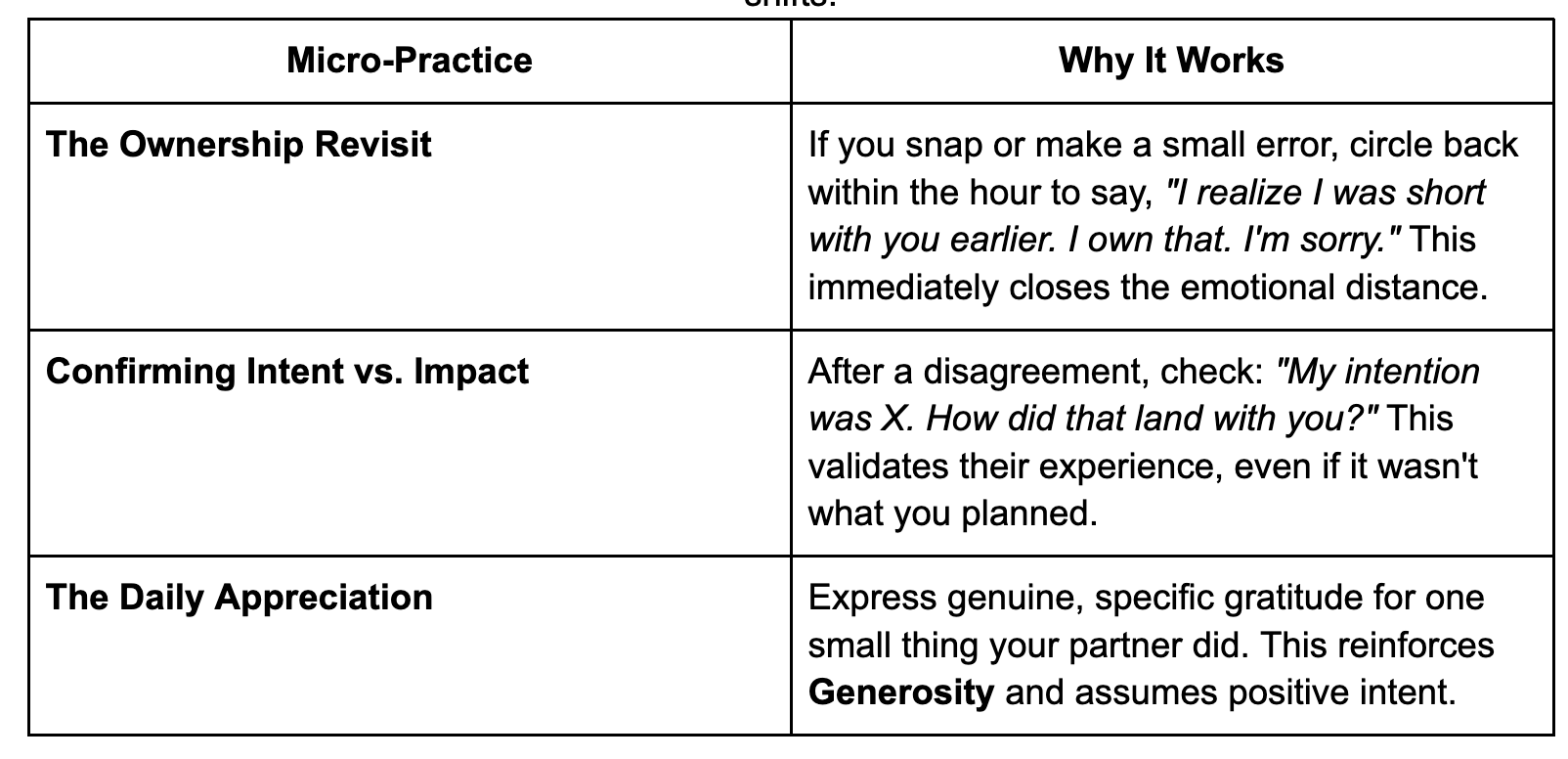
Micro Practices: Why They Work
Over time, this consistent act of prioritizing the relationship builds psychological safety and deep, lasting intimacy. How to Make the Shift: Daily Micro-Practices
You don't need a crisis to practice relational accountability. It’s built in small, consistent actions—what we call micro-practices in couples coaching.
If you want to move from control to connection in your marriage, integrate these tiny, powerful shifts:
Trust grows when we’re brave enough to admit our humanity. Make the shift from compliance to care, and watch your relationship flourish.
Choosing to invest in relationship coaching is not a sign of failure; it's a testament to your commitment to the partnership and to each other's well-being. If any of these signs resonate with your current situation, reach out to us to schedule your complimentary couples coaching session.